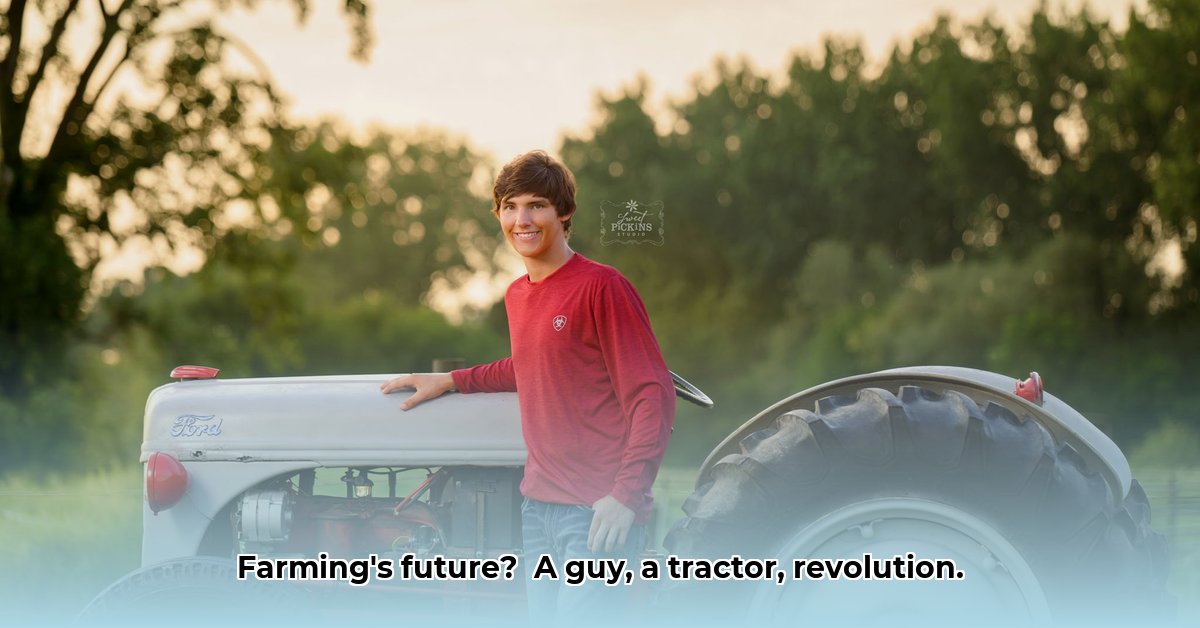
The iconic image of a farmer behind the wheel of a tractor endures. But today's "guy in the tractor" is more than just a plowman; he's a high-tech operator managing a complex, data-driven enterprise. Modern agriculture is undergoing a radical transformation, blending traditional farming wisdom with cutting-edge technology to create a more efficient and sustainable food system. This progress offers immense potential, but also presents considerable challenges. How will this technological revolution reshape the agricultural landscape, and what does it mean for the future of farming? For more information on modern tractors, check out this tractor buying guide.
The High-Tech Farmer: Precision and Progress
Meet our modern farmer. He's not simply driving a tractor; he's piloting a precision-guided machine, using GPS to plant seeds with pinpoint accuracy and sensors to monitor soil conditions and crop health in real-time. This is precision farming, a data-driven approach that optimizes yields while minimizing resource waste. He might be checking his tablet, adjusting his strategy based on real-time feedback from his fields. This allows for efficient use of resources: less fuel, water, and chemical inputs. This data-driven approach replaces guesswork with evidence-based decision-making.
The impact is significant: decreased environmental footprint, healthier crops, and higher profitability. The "guy in the tractor" is now as much a tech expert as a farming professional. A successful farmer today needs a strong understanding of both the land and the latest technological advancements. But is this progress without its drawbacks?
"The transition to precision agriculture requires a significant investment in technology and training," says Dr. Anya Sharma, Agricultural Economist at the University of California, Davis. "This can be a challenge for smaller farms specifically, threatening to widen the gap between large and small-scale operations."
The Challenges of Technological Advancement
While the technological revolution promises remarkable advancements, significant hurdles remain. The high initial cost of new equipment poses a major barrier, particularly for smaller farms. This raises critical questions about equity and access.
Another significant concern is the potential displacement of human labor. Automation will likely reduce the demand for manual labor in fields. This necessitates robust retraining programs and social safety nets to help farmworkers transition to new roles. We must carefully consider the human cost of technological innovation. A smooth transition requires thoughtful planning to ensure everyone benefits. How can we ensure a just transition for all stakeholders in this evolving landscape?
Collaboration: A Team Effort for Sustainability
The future of farming is not solely about technology; it's about collaboration among all stakeholders. Effective solutions require the coordinated efforts of various groups, each with a vital role to play.
Governments must actively support farmers through subsidies, education, and infrastructure development. They need to create a supportive environment where farms of all sizes can thrive and adopt sustainable practices. What policies are needed to ensure a level playing field for all farmers in this technological age?
Technology companies must produce affordable and user-friendly solutions accessible to farmers of all sizes. They should focus on technologies that empower smaller farms, bridging the technological divide between large and small-scale agricultural operations. How can we make precision agriculture technology equally accessible to every farmer, regardless of size or resources?
Farmers themselves must embrace innovation and actively adapt their practices to incorporate new technologies. This requires continuous learning and a willingness to adopt new methods. The collaborative spirit is essential for navigating this transformation successfully.
The Enduring Value of the Human Touch
Even with cutting-edge technology, human expertise remains irreplaceable. Farmers' deep understanding of their land, their intuition, and their experience remain invaluable assets in the face of ever-evolving environmental and economic realities. Technology enhances their capabilities, but it does not replace their experience and judgment. It's the partnership between human skill and technological tools that forms the most sustainable path forward.
"Technology provides the tools, but it's the farmer's skill and knowledge that ultimately drive success," explains Mr. John Miller, a fifth-generation farmer from Iowa. "It's a collaboration between human intuition and technological assistance."
Building a Sustainable Future: Opportunities and Challenges
The "guy in the tractor" of the future will be a skilled professional who seamlessly integrates traditional farming methods with technological expertise. He will be a data analyst, capable of interpreting and utilizing vast amounts of information to optimize his operations. He will be environmentally conscious, focused on resource management. Most importantly, he will be integral to a secure and sustainable food system.
Achieving this vision requires continued investment in robust research and development, smart policymaking, and a deeply committed collaborative effort among all interested parties. The road ahead is paved with challenges, but the potential rewards—a more sustainable, efficient, and just food system—make the journey worthwhile. The story of the "guy in the tractor" is the future of farming, a narrative still being written.
Actionable Steps Towards a Sustainable Future
- Invest in Education and Training: Governments and technology companies must invest in programs that educate farmers on utilizing new technologies effectively. (Efficacy: Increased adoption rates of sustainable practices)
- Promote Affordable Technology: Development and deployment of affordable precision agriculture technology are crucial for small-scale farmers. (Efficacy: Improved yield and reduced costs for smaller farms)
- Foster Collaboration: Strengthening collaboration between farmers, technology companies, and policymakers is essential for building a sustainable agricultural future. (Efficacy: Enhanced innovation and equitable technology access)
The transformation of agriculture is already underway. While there are uncertainties and challenges ahead, the potential for a more sustainable and productive agricultural system is clear. The "guy in the tractor" is evolving, and the future of farming is evolving with him.